
How We Paint While Beds Are Burning
Hans Hofmann paints a chair.

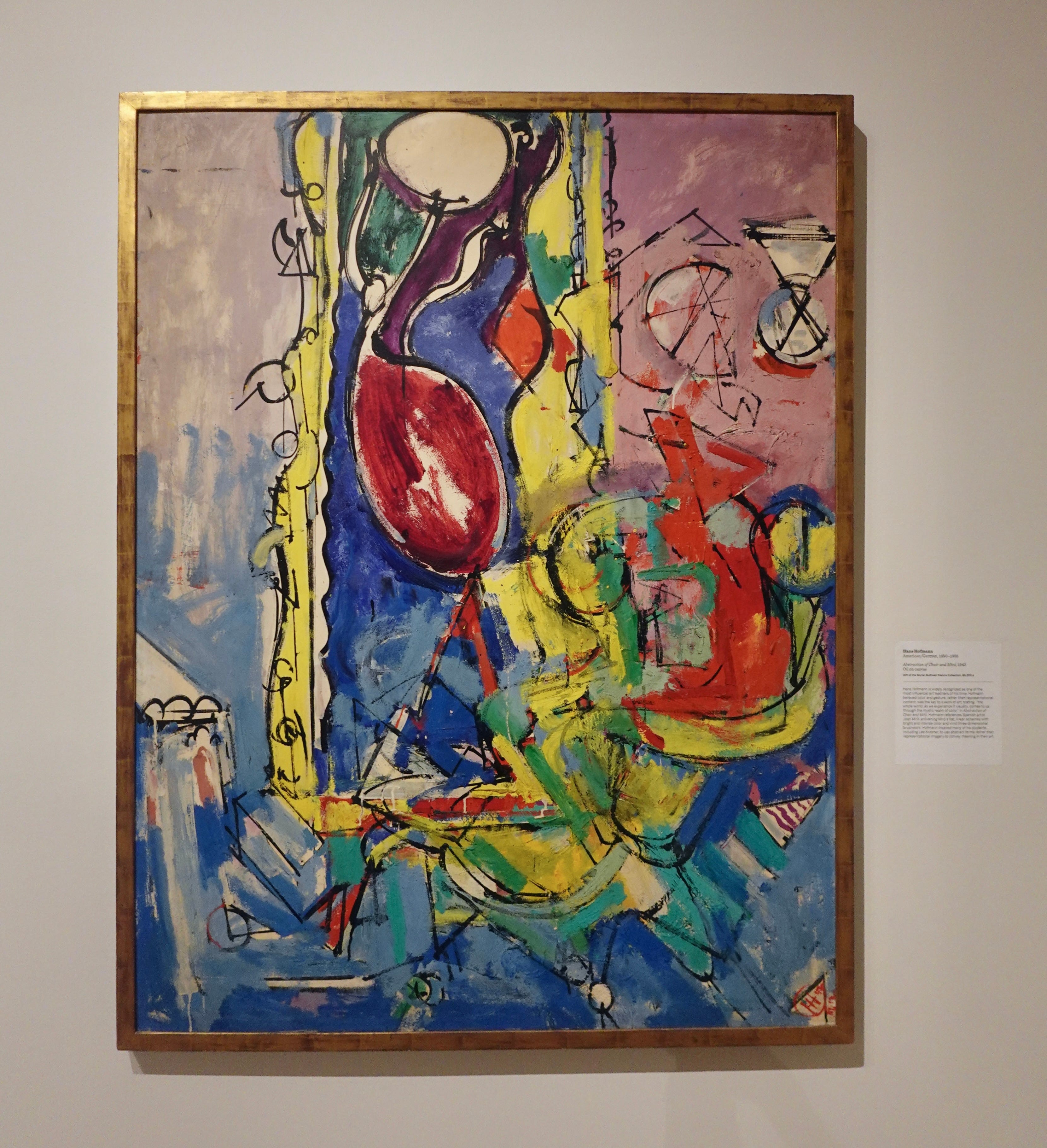
It was not the painting I planned to spend time with when I went to New Orleans Museum of Art on a Wednesday last month. When I don’t have a particular exhibition in mind, I often focus on one work from the permanent collection, a favorite like Manet’s Peaches. I usually pass through the Modern gallery without stopping, but something crossed my mind when I glanced at Hans Hofmann’s Abstraction of Chair and Miró. I approached the painting’s wall label to see what year it was made. 1943.
In 1943,
It had been three years since the Nazi invasion of Poland and two years since the bombing of Pearl Harbor.
The months-long Battle of Stalingrad ended in February of 1943 with a death toll approximated at 1.2 million, though some sources say it was much higher.
Bea Arthur, “Dorothy” from The Golden Girls, became a U.S. Marine.
“The Zoot Suit Riots,” clashes between U.S. servicemen and Mexican American youths, occurred in L.A.
Joni Mitchell and Mick Jagger were born.
In Munich, a non-violent student group opposing the Nazi Regime were distributing pamphlets when members were arrested, tried, and convicted. Three days later, siblings Hans and Sophie Scholl and fellow student Christoph Probst were executed.
A volcano appeared in the cornfield of Mexican farmer Dionisio Pulido.
In Argentina, a coup resulted in a change of government.
The New York Yankees won the World Series.
Himmler, commander of the German SS, gave orders that Romani would be detained and transported to concentration camps.
Imprisoned by the British, Mohandas Gandhi held a 21-day hunger strike while famine in Bengal claimed hundreds of thousands of lives.
In Bearcreek, Montana an explosion at Smith Mine #3 killed 74 coal miners.
Fanfare for the Common Man by Aaron Copland was premiered by the Cincinnati Symphony Orchestra.
Dictator Benito Mussolini was voted out of power by his own Grand Council and arrested. Italy joined the side of the Allies.
Philip Morris published ads claiming, “You’re SAFER smoking PHILIP MORRIS.”
FDR, Churchill, and Stalin met in Iran to discuss war strategies and potential terms for a peace settlement.
And Hans Hofmann—based in New York and Provincetown—painted Abstraction of Chair and Miró.
*
Standing in front of the painting, I shoom my head and stepped back, a reflexive pulling away from what to me is visual noise, the palette like pressing all the piano keys at once and mark-making chaos. Black, calligraphic brush marks create a too-thin armature for all that paint. I don’t get it. I don’t like it.
I lingered in the not-liking, not-getting it, which I’ve learned to do as I’ve gotten older and grown closer to paintings I didn’t at first understand. I stood there facing something repellant (to me) and thinking about 1943. Hans Hofmann, who had emigrated from Germany in 1932, was painting a chair—and Miró?—as the world carried on its business of wars, executions, and forced starvations. Meanwhile, there were dinner parties, births, and the Academy Awards.
*
After several minutes, I came around to appreciating the left side of the painting where rosy beige scumbles into dusty light blue, suggesting atmosphere and a deeper space. It reminded me of a fourth-floor view through a balcony window in a Parisian apartment. But this was painted in North America. Paris was under Nazi occupation. In July the year before, 13,152 people, including 4,115 children, were detained by French police, on orders from the Germans, and were sent to Auschwitz.
*
The painting’s title, Abstraction of Chair and Miró, presented a mystery: What does this ugly painting have to do with Miró? Maybe the lines look a bit Miró-y? Did the two artists knew each other? Maybe Joan Miró is represented by those two blobs, a figure abstracted beyond recognition. I didn’t think so.
Miró had been living in Paris, returning frequently to his homeland in Spain until the Spanish Civil War. That war had just ended when the German army invaded France in 1940. So Miró returned to Spain, now ruled by the authoritarian Franco and would not travel to the United States until 1947 and would not meet Hans Hofmann until 1949.
The wall label told me nothing about why Miró’s name is in the title of Hans Hofmann’s 1943 painting.
*
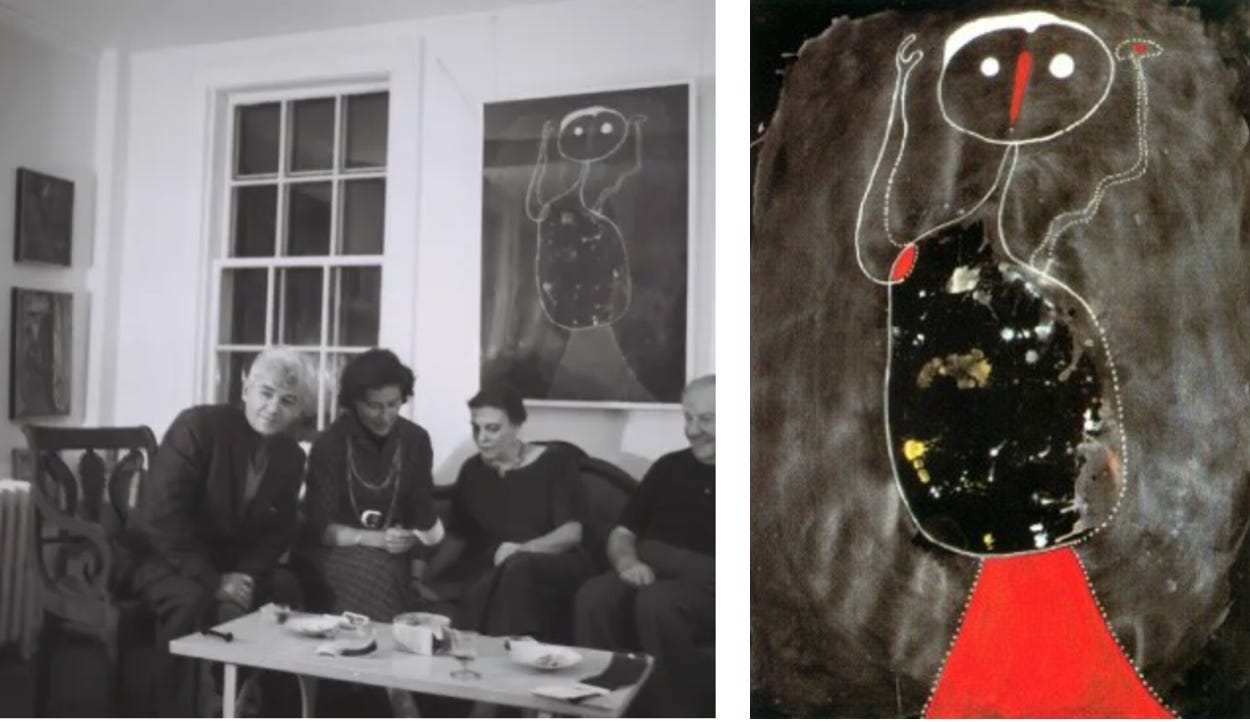
Days later, I got to the bottom of it. As it turns out, the “Miró” in Abstraction of Chair and Miró is referring to a gouache painting on the wall of Hans Hofmann’s apartment. I don’t know how he acquired it, but there it is, in photographs taken on Thanksgiving in 1958. It was satisfying to have sorted out that mystery, but what I really wanted to know was this:
How could Hans Hofmann go about the business of making paintings in 1943 when 232 thousand children (German, French, Polish, Belorussian, Russian, Ukrainian, Roma, Sinti) had been or would be killed in Auschwitz? What could he—in New York City—have done to stop it? Please tell me.
Was he thinking about Joan Miró when he painted an empty chair? Reading about 1943, I grow dizzy with history and the mind-blowing evil or indifference carried out by those with the most power, the same stories over and over.
Museums are full of art made during war and genocide and oppressive regimes. If art were required to illustrate atrocities, the world would run out of red paint. And hope. Not every painting can be Guernica.
*
Speaking of Modernism, I used to live in Southern France, walking distance from the Les Milles Internment Camp where Max Ernst and other notable artists, writers, and musicians were detained in the early days of World War Two. Across the gallery from Abstraction of Chair and Miró hangs Max Ernst’s Everyone Here Speaks Latin, also painted in 1943.
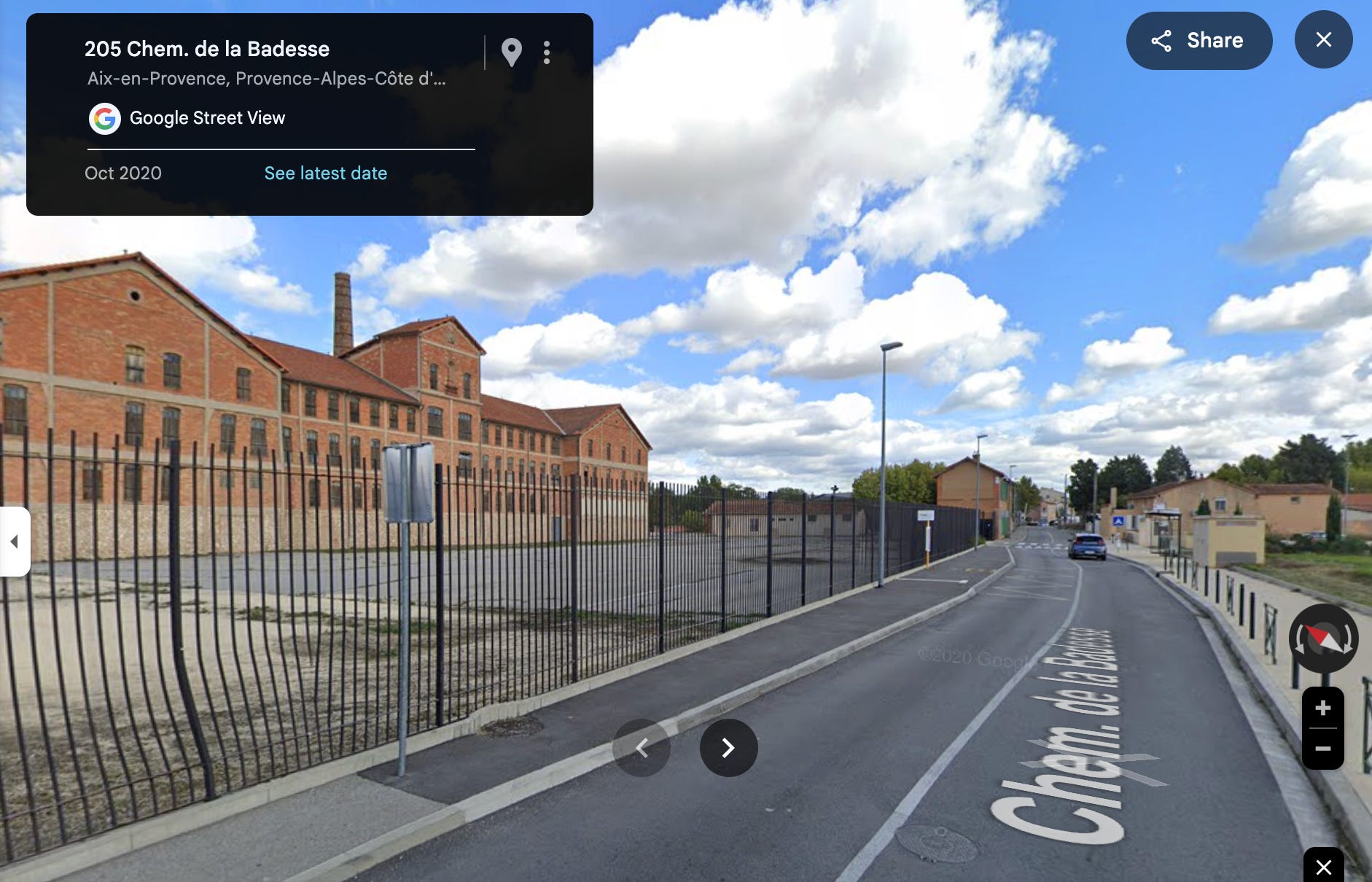
In1939, French authorities released a list of “official” enemies of state, many of them German and Austrian men who had fled Germany’s anti-intellectual and anti-Jewish climate and policies. These men were required to report to local assembly points. They were detained and held in internment camps including the one in Les Milles, a former tile factory I used to drive by at least once a week.
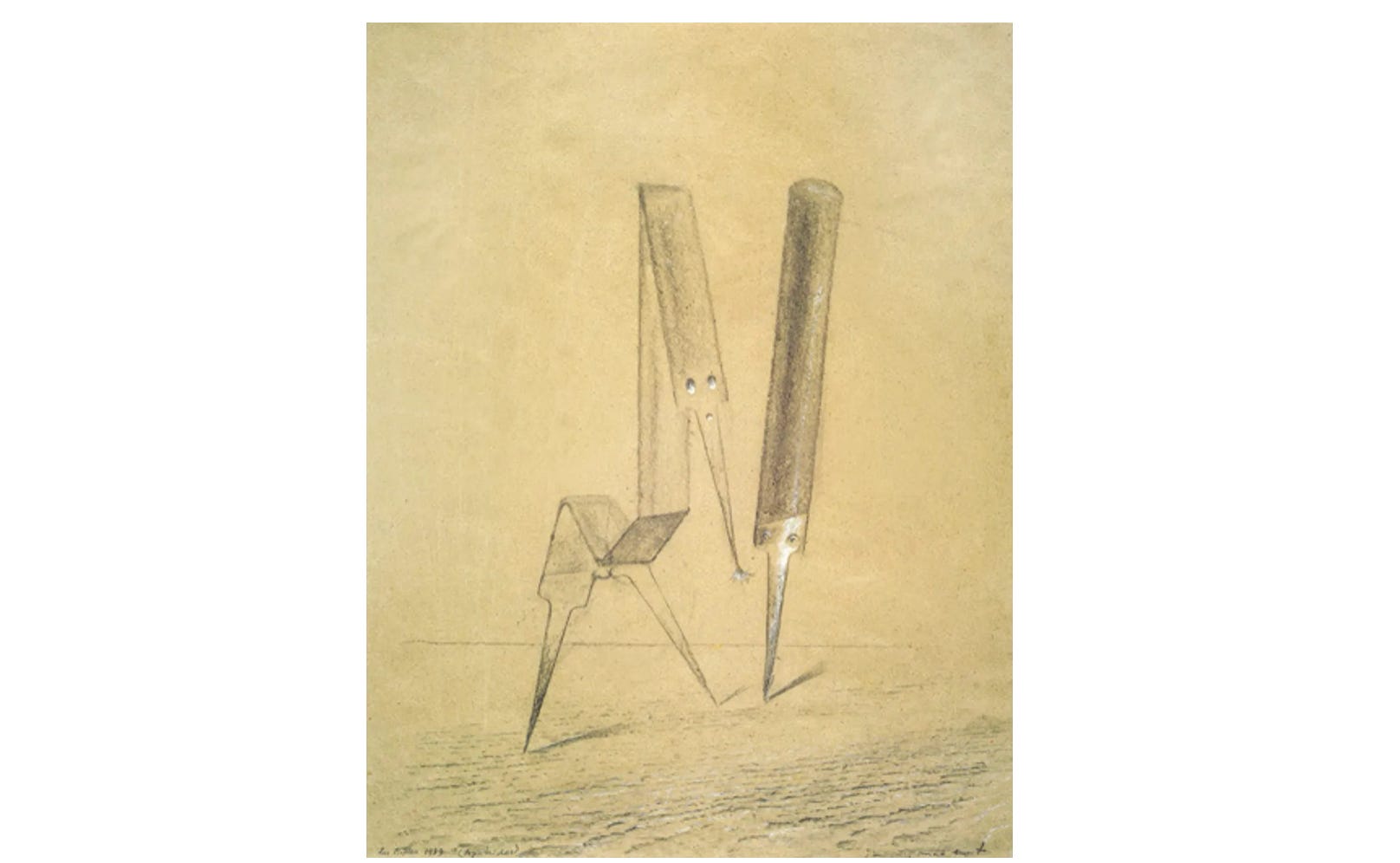
Max Ernst was released from the Les Milles camp a few weeks after his arrest by French authorities. He was detained again by the Gestapo before he escaped to America in 1941 with help from Varian Fry and art collector Peggy Guggenheim who he married later that year.
The camp in Les Milles closed in 1940 then reopened a month later when the French government ordered the arrest and internment of 3,000 foreigners living in France. Les Milles became a “transit camp” for people attempting to emigrate to France. In August of 1942, the first convoy of prisoners left Les Milles for Auschwitz.
*
In NOMA, in June of 2025, I paused in that gallery of paintings from an era I never really connected with and maybe avoided. I was asking what it meant to make art in an era of toxic Nationalism and war. I wanted to know what we do with the survivors guilt.
In 1943
Max Ernst painted Everyone Here Speaks Latin.
Joan Miró painted Femme, Oiseau, Etoile (Woman, Bird, Star).
And Hans Hofmann painted Abstraction of Chair and Miró.
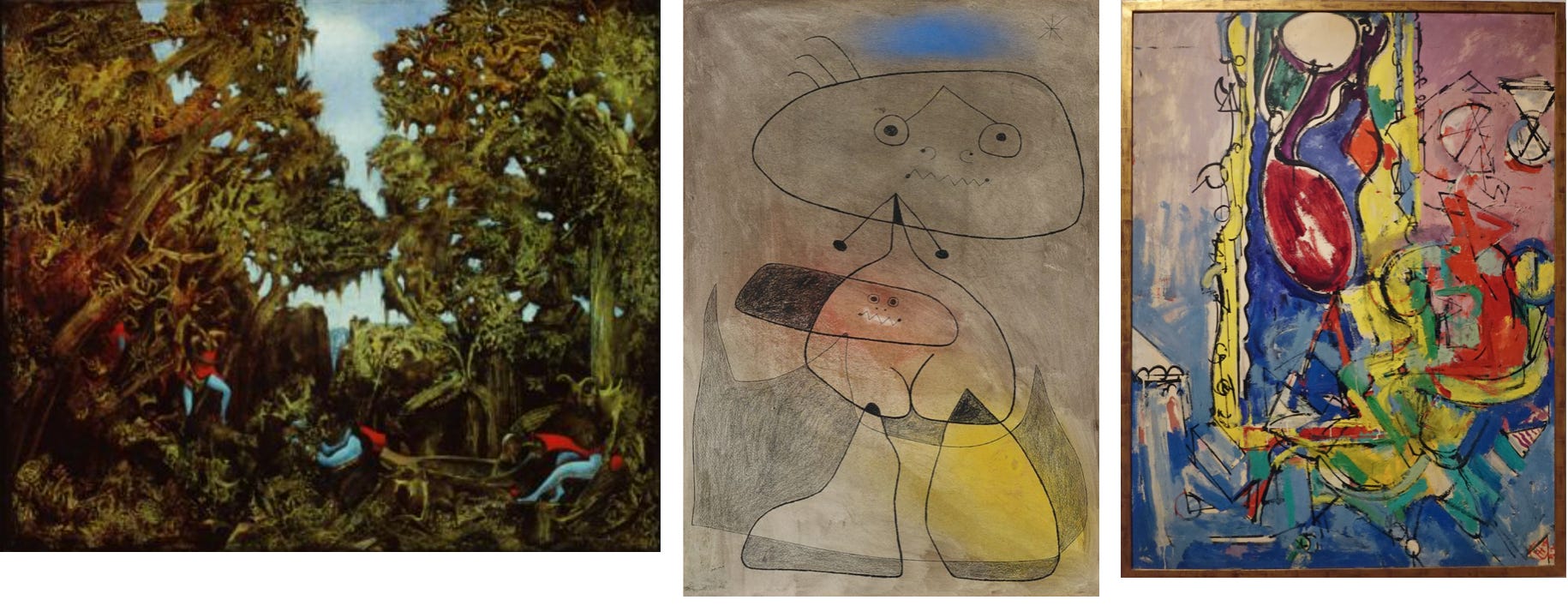
I don’t really “like” any of these paintings but the half hour I spent in front of Hoffman’s Abstraction of Chair and Miró spiraled into days of (very non-academic) inquiry. As I’m writing this now, I’m thinking two (very non-academic) things: the Midnight Oil song Beds Are Burning, which has been playing in my mind for days. “How do we sleep when our beds are burning?”
And, I’ve been thinking of the question, How do you live with yourself? The phrase—which is understood to be rhetorical—can be considered literally. How do we live with ourselves? We just do. We live. And, ideally, we move courageously in harmony with what we value, and—to get biblical for a second—we “Speak up for those who cannot speak for themselves, for the rights of all who are destitute…[we] defend the rights of the poor and needy.” (Proverbs 31:8-9).
Speaking up takes different forms. And meanwhile, we spend our days on earth, we live with ourselves and others, and all humanity.
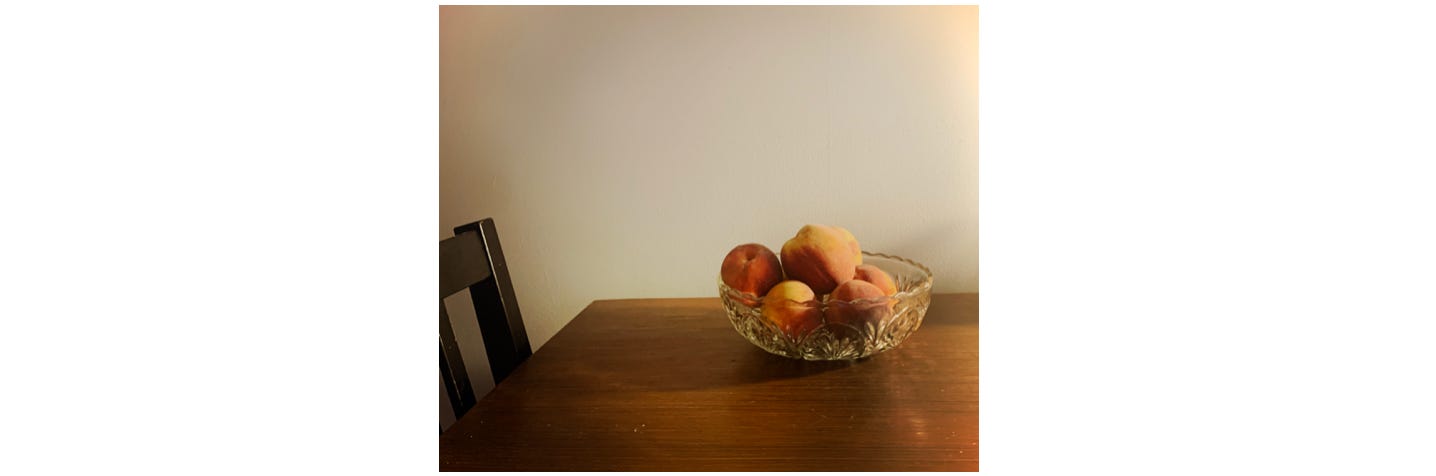
The sight of peaches on a table, or an empty chair in a quiet room can fill a person with enormous unnamable feelings—desire, contentment, anxiety, melancholy, or overwhelming gratitude that we are alive. So we paint, we write, we make music, heavy with all of it.
As Im trying to finally finish this piece of writing that I hadn’t planned to write, a bluejay a few houses down is screaming. And there’s a mockingbird right there, on the wire, imitating the sounds of other birds. A cardinal peeps in the hedge and we call all of it “birdsong.”
They have songs of hunger, and songs of danger, songs of persuasion and connection, and I’d like to think that there are songs whose only purpose is the preservation of joy.
Great piece. Its such an interesting line of inquiry- what we dont like. But also thinking about while beds are burning...that we get on being alive. In a way its always collectively our fault. These things happen because we allow the strong to dominate the weak and the greedy to get the prizes. We dont as a culture place enough value on the small, But that is why attention to the small is also critical. I think we do have responsibility to take action on issues, but art isnt probably the best way (especially if ego gets involved).
Wonderful